Centralised Lubrication: Cutting Downtime in Heavy Plant
Lubrication
February 04, 2026
In a cement plant or steel mill, a single machine can carry hundreds of lubrication points, many of them awkward to reach and some genuinely unsafe to service while running. Manual greasing on that scale is not really a procedure so much as an aspiration: points get missed, others are over-greased, and the only evidence either way is a bearing that eventually fails.

“A centralised system replaces a judgement call made under time pressure with a measured dose delivered on schedule, every cycle.”
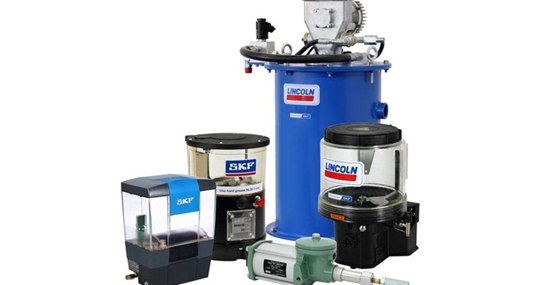
Centralised systems solve this by pumping lubricant from one reservoir through metering devices that portion out an exact quantity to each point. Dual-line designs are built for large, widely distributed installations: two main lines are supplied alternately by a high-pressure pump, and metering devices deliver individually set doses. Because the lines are pressurised in turn, the layout can run long distances and serve up to two thousand points without redesign.
The operational gain is not only that lubricant arrives reliably. It is that greasing no longer requires anyone to climb onto a running machine, which removes a recurring safety exposure as well as a maintenance task.
Monitoring Turns Lubrication Into Data
The real step change comes from monitoring. Indicator pins give a visual check that a metering device has cycled, while proximity switches and piston detectors feed the same information to a control system. Reservoir level, line pressure, cycle timing and cycle count can all be tracked continuously.
That turns lubrication from an assumption into evidence. If one outlet blocks, the system reports it rather than waiting for a bearing to run dry, and the fault is fixed during a planned stop instead of an unplanned one. For plants where an hour of downtime is measured in lakhs, that distinction is the whole business case.