Seal Selection: Matching Material to Pressure, Temperature and Media
Sealing
January 09, 2026
Seals fail for reasons that are almost always predictable in hindsight: a material that was never compatible with the fluid, a profile asked to handle pressure it was not designed for, or a temperature range quietly exceeded during summer running. Because a seal is inexpensive next to the machine it protects, it tends to be chosen on price — and that is exactly where the cost appears later.

“The seal is one of the cheapest components in a cylinder and one of the most expensive to get wrong.”
Start with the media. Mineral oils, phosphate esters, water glycols and process chemicals each rule out particular elastomers, and a material that swells or hardens in service will fail regardless of how well the cylinder was built. Temperature comes next, including transient peaks rather than the average, since brief excursions are enough to damage many compounds permanently.
Only then does pressure become the deciding factor. High-pressure duty and transverse loading push seals towards extrusion, which is where PTFE-based and polyurethane materials earn their place: they resist extrusion, wear slowly and keep friction low enough for smooth movement.
Static, Dynamic and Everything Between
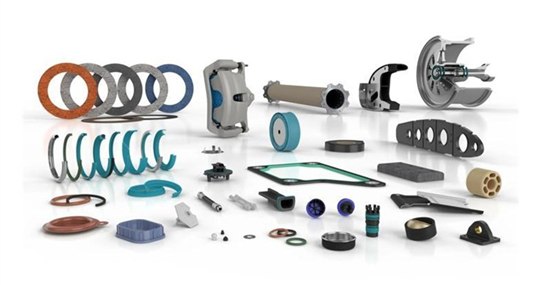
Static seals in fixed joints have the easiest life and the widest choice. Dynamic seals are harder, because the same component must hold pressure while moving continuously. Piston seals seal against the cylinder bore to build pressure, rod seals keep fluid in and contamination out, and wipers stop ingress from the outside — each doing a different job in the same assembly.
Rotary and oil seals add shaft speed and surface finish to the equation, with a garter spring maintaining lip force as the material relaxes over time. Getting the combination right is what turns a cylinder rebuild into a repair that lasts rather than one that returns next season.