Screw or Centrifugal? Choosing the Right Pump Technology
Pumps
December 16, 2025
Pump selection tends to start with flow and head, but those two numbers rarely decide the technology on their own. Viscosity, shear sensitivity, gas content and how precisely the flow must be controlled matter just as much, and they are the characteristics most often discovered after commissioning rather than before.

“Flow and head narrow the field. Viscosity, shear and controllability usually decide the technology.”
Centrifugal pumps are the default for good reason. They move large volumes of water-like fluid efficiently, the design is simple and robust, and maintenance is straightforward. With the right materials they handle corrosive, abrasive, hot and contaminated liquids, which is why they remain the most widely used pump technology in industry.
Their weakness is viscosity. As fluid thickens, efficiency falls away sharply, and flow varies with discharge pressure — awkward when a process needs a consistent rate regardless of downstream conditions.
Where Positive Displacement Wins
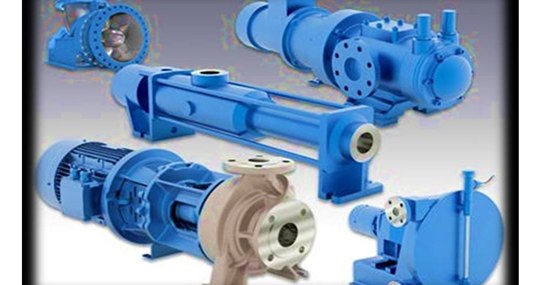
Screw pumps take over as viscosity climbs. Three intermeshing screws deliver smooth, low-pulsation flow across an exceptionally wide viscosity range, and because they are positive displacement, flow depends on speed rather than pressure. That makes them controllable and self-priming, and quiet even at high pressure — which is why they are standard for fuel oil transfer and lubrication duty.
Beyond that, progressing cavity pumps suit viscous, semi-solid or shear-sensitive material, while gear and precision gear pumps handle metering and dosing where accuracy matters more than volume. Matching the technology to the fluid at specification stage costs nothing; discovering the mismatch after installation rarely does.